This article contains affiliate links. We may earn a small commission on items purchased through this article, but that does not affect our editorial judgement.
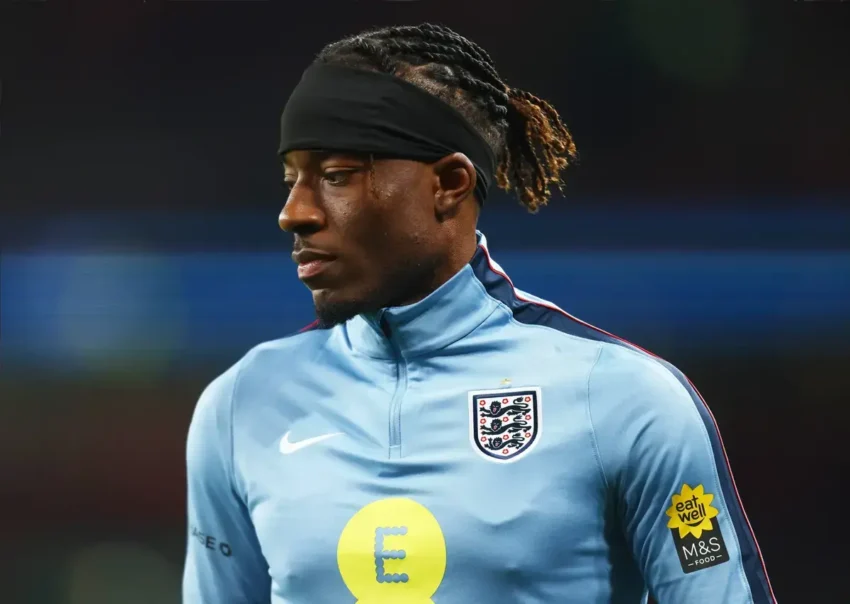
Arsenal winger Noni Madueke injured his left knee whilst playing for England on Friday night.
The Mirror report Ryan Taylor shared a photo of the 24-year-old wearing a brace after the 1-1 draw against Uruguay.
When asked about the seriousness of the injury, Taylor replied that Madeuke was “limping heavily”, which is never a good sign.
The winger lasted only 38 minutes in the friendly versus Uruguay before he was forced off the pitch.
Madueke is unlikely to be fit for the FA Cup quarter-final
Based on what we have seen, it would be a surprise if the England international was available for the trip to St Mary’s on Saturday.
Madueke would have had a good chance of starting against Southampton in the FA Cup, with manager Mikel Arteta likely to field a much-changed first eleven.
His injury does raise the prospect that Max Dowman will be given a run out from the start next weekend, which is a possibility that will greatly excite fans.
Other Arsenal injury news
Several first-team players had already withdrawn from international duty due to fitness problems, prior to this latest setback for Madueke.
Gabriel (knee), Leandro Trossard (hip), William Saliba (ankle) and Jurrien Timber (groin) did not meet up with their countries due to various injuries.
Eberechi Eze has a calf problem that forced him to miss the Carabao Cup final defeat to Manchester City. The attacking midfielder could be out until the beginning of May. Buy an Eze shirt from Arsenal Direct here.
Captain Martin Odegaard is still nursing a knee issue, but there is optimism that he will return to action after the international break.
Read more about the Arsenal First Team Squad for 2025/26 here
PakarPBN
A Private Blog Network (PBN) is a collection of websites that are controlled by a single individual or organization and used primarily to build backlinks to a “money site” in order to influence its ranking in search engines such as Google. The core idea behind a PBN is based on the importance of backlinks in Google’s ranking algorithm. Since Google views backlinks as signals of authority and trust, some website owners attempt to artificially create these signals through a controlled network of sites.
In a typical PBN setup, the owner acquires expired or aged domains that already have existing authority, backlinks, and history. These domains are rebuilt with new content and hosted separately, often using different IP addresses, hosting providers, themes, and ownership details to make them appear unrelated. Within the content published on these sites, links are strategically placed that point to the main website the owner wants to rank higher. By doing this, the owner attempts to pass link equity (also known as “link juice”) from the PBN sites to the target website.
The purpose of a PBN is to give the impression that the target website is naturally earning links from multiple independent sources. If done effectively, this can temporarily improve keyword rankings, increase organic visibility, and drive more traffic from search results.